What happens in the brain when cannabis makes you anxious?

Northwestern scientists have identified, for the first time, a specific group of neurons — cells in the brain — that appear to contribute to anxiety caused by cannabinoid drugs, particularly when those drugs are combined with stressful conditions. Cannabinoids are a category of substances that includes THC, the main psychoactive ingredient in cannabis.

To investigate how cannabinoids influence fear and anxiety, researchers exposed mice to a threatening smell derived from fox urine. Before encountering the odor, the animals were given either a placebo or a synthetic cannabinoid drug.

Mice that received the cannabinoid froze more frequently and spent less time exploring the predator scent. Researchers traced these anxiety related behaviors to increased activity in a small population of brain cells known as somatostatin neurons. These neurons are located in the central amygdala, an area of the brain involved in processing fear and stress.

When the researchers genetically silenced the somatostatin neurons, the mice that received the cannabinoid became less likely to avoid the predator odor. The result suggested that these cells play an important role in producing the anxious response.

“The results of this study could explain why a good trip can turn bad pretty quickly if people consume too much cannabis or the situation they are in turns stressful or scary,” said study senior author Dr. Sachin Patel, chair of psychiatry and behavioral sciences at Northwestern University Feinberg School of Medicine.

The study was published on Oct. 2 in Nature Communications.

Tracking the Brain During a Threat

Patel and his colleagues gave mice several different doses of the synthetic cannabinoid and measured their reactions to the predator odor. The researchers recorded how much time the animals spent near the scent and whether they responded by freezing or fleeing.

At the same time, the team monitored activity inside the brain by implanting a small microscope into the mice’s brain.

Researchers also studied brain tissue to determine how cannabinoids changed communication between neurons. Their experiments showed that the drug weakened a natural brain mechanism that normally acts as a “brake” on somatostatin neurons. With that restraint reduced, the neurons became more active.

“Higher doses of cannabinoids and environmental stress worked together to synergistically release the ‘brake’ on the central amygdala, which in turn drove excessive anxiety,” Patel explained.

Why Cannabis and Anxiety Matter

Cannabis use in the U.S. has steadily increased in recent years. At the same time, emergency department visits involving adverse effects from the drug have also risen.

Previous studies have found an association between cannabis use and a higher long term risk of anxiety. Anxiety and mood disorders are also on the rise globally.

“Understanding how cannabis affects brain function to generate its psychoactive effects could ultimately reveal new ways to counteract negative consequences should they arise in some people,” Patel said.

The researchers believe the findings may also have relevance beyond cannabis related side effects. Patel said the same neurons could potentially represent a broader target for understanding or reducing anxiety.

“Suppressing the activity of somatostatin neurons in the central amygdala could represent a final pathway for reducing anxiety symptoms, not just in the context of cannabis side effects,” he explained.

7 Everyday Foods That Shrink Hanging Belly Fat Fast

Are you trying to blast belly fat? Trimming down your waistline typically involves a combination of factors, primarily diet and exercise. When it comes to food, some are better than others for fat burning, says Tara Collingwood, MS, RDN, CSSD, LD/N, ACSM-CPT, also known as The Diet Diva. The Board-Certified Sports Dietitian and co-author of Flat Belly Cookbook for Dummies recently revealed to us her go-to foods for fat loss. Here are 7 everyday foods that shrink hanging belly fat fast.

Avocados

Shutterstock

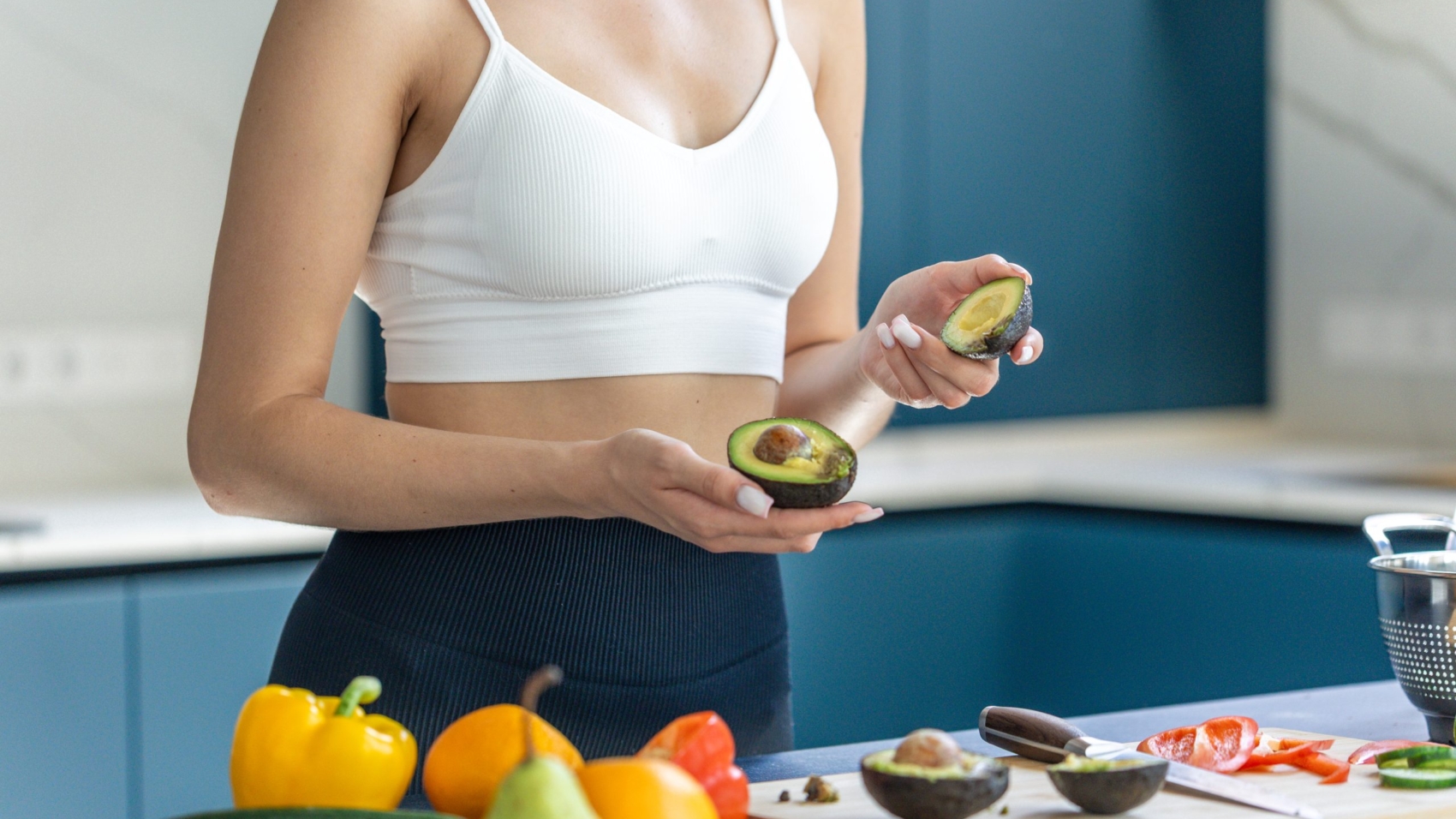
What is the first food Collingwood recommends to shrink belly fat? Avocados. “Loaded with healthy fats (monounsaturated), avocados help regulate blood sugar, reduce cravings, and keep you feeling full longer, aiding in belly fat reduction,” she says. There are lots of ways to enjoy an avocado. You can add them to a salad, mash them up and make avocado toast, or eat them as a side with breakfast, lunch, or dinner. However, try not to overdo it, as they do have a decent amount of calories.

Eggs

Shutterstock

6254a4d1642c605c54bf1cab17d50f1e

Eggs are one of the most versatile foods, and a great source of nutrients if you are trying to lose weight. “Packed with high-quality protein, eggs promote satiety, stabilize blood sugar, and help your body burn more calories for digestion (the thermic effect of food),” says Collingwood. They also fill you up fast. Again, they do have a decent amount of fat and calories, so consider mixing an egg or two with egg whites to add protein without much caloric impact.

Berries

Shutterstock

Berries, including blueberries, strawberries, and raspberries, are another excellent food for shrinking belly fat, according to Collingwood. “Berries are low in calories and high in fiber and antioxidants, which fight inflammation and support fat loss, especially around the belly,” she says. There are many ways to enjoy berries, either fresh or frozen. You can eat them on their own, add them to yogurt or cereal, or blend them in a smoothie.

Olive Oil

Shutterstock

Olive oil may be fatty, but it’s the good kind and will help you burn fat. It’s a “healthy fat that helps control appetite and supports fat metabolism,” says Collingwood. “A drizzle on salads or in cooking can make a difference without overloading calories.”

Nuts

Shutterstock

Nuts are another healthy fat to help you burn fat. This includes almonds, walnuts, and pistachios. “Rich in healthy fats and protein, nuts help curb cravings, stabilize blood sugar, and promote a healthy metabolism. Just stick to a small handful per day!” says Collingwood. You can eat a handful of nuts as a snack, toss them in your salad, or use them when cooking your favorite meals.

Beans and Lentils

Shutterstock

Beans, including white, black, and pinto, and lentils, are another belly fat-blasting food, according to Collingwood. “High in fiber and protein, they stabilize blood sugar and improve digestion, helping you feel full longer,” she says. They will also help you feel full faster. You can serve them as a side dish or even add them to a salad for an extra dose of nutrients.

Leafy Greens

Shutterstock

Another food that will help burn belly fat? Leafy greens. Collingwood recommends spinach, kale, and arugula. “Low-calorie, nutrient-dense, and high in fiber—greens aid digestion, reduce bloating, and help create a calorie deficit for fat loss,” she says. Make them into a salad, sauté them as a side dish, or add them to your egg scramble for an extra dose of yum.


11 Best Costco Finds for Weight Loss in 2026

Costco is a great place to shop for groceries, especially if you are trying to lose weight on a budget. The warehouse carries an abundance of fresh meat, fish, poultry, and produce, as well as a wide selection of pre-made and packaged food and beverages to fuel your workouts and support weight-loss goals. What should you buy at Costco if saving money and weight loss go hand-in-hand with your 2026 goals? We asked Tara Collingwood, MS, RDN, CSSD, LD/N, ACSM-CPT, a Board Certified Sports Dietitian and co-author of the Flat Belly Cookbook for Dummies, for her top 11 picks. Here are the 11 best Costco deals for weight loss in 2026.

One of Collingwood’s top picks is Kirkland Signature Organic Greek Nonfat Yogurt. “A high-protein, low-fat choice ideal for breakfast, snacks, and smoothies. Keeps you full longer and supports muscle maintenance during weight loss,” she says.

Frozen Organic Berries

Frozen Organic Berries are another must-buy, especially the Kirkland Signature brand, which offers great value. “Fiber-rich and no added sugar for smoothies, oatmeal, or snacking without excess calories,” says Collingwood.

Oatmeal

Oatmeal, which can be purchased in bulk at Costco, is an excellent value for breakfast and offers many nutritional benefits. “A high fiber whole grain that supports satiety and steady energy and perfect for meal prep and balanced breakfasts,” says Collingwood.

Frozen Salmon or Chicken Breasts

Frozen Salmon or Chicken Breasts are great to keep in the freezer for cooking lunch or dinner. Costco always sells them for a lot less than traditional grocery stores. “Lean proteins that help build and maintain muscle while assisting with appetite control,” says Collingwood.6254a4d1642c605c54bf1cab17d50f1e

Safe Catch Ahi Tuna & Wild Planet Sardines

Safe Catch Ahi Tuna & Wild Planet Sardines are another one of her top Costco picks. “Shelf-stable, high-protein seafood packed with omega-3s is an easy addition to salads, bowls, or wraps,” she says.

Protein Shakes

Costco sells protein shakes at a much lower price than other stores. “Ready to drink, high-protein beverages help curb cravings and support daily protein goals (various brands),” she says.

Costco is also a great place to shop for pre-portioned snacks that are actually good for you. She recommends Kirkland Signature Organic Hummus and other high-fiber snacks. “Hummus to pair with veggies and whole grains,” she says.

7 Costco Items Shoppers Say Are No Longer a Good Deal

Low-Sugar Sparkling Tonic Drinks

Low-Sugar Sparkling Tonic Drinks are another one of Collingwood’s Costco picks. “Can make low sugar mocktails or just use as flavored water and are a healthier alternative to sugary beverages,” she says.

Collingwood also puts Kirkland Signature Almond Flour and Hemp Hearts in her cart. “These are great for home baking and boosting protein and healthy fats,” she says.

Greens & Producee

Don’t forget to stock up on greens and produce on your Costco run. These items are priced well under retail, and make healthy eating easy. “Pre-washed leafy greens and bulk produce make it easy to fill half your plate with nutrient-dense, low-calorie foods,” Collingwood says.

Healthy Pantry Staples

And, don’t skip all the healthy pantry staples, including quinoa, beans, and other grains. “Fiber-rich whole grains and legumes help keep hunger down and support plant-forward eating patterns,” says Collingwood.

Children at risk for depression get “stuck” on sad faces

A smile or a frown may reveal more than emotion alone. The faces that capture a child’s attention could provide important clues about their mental health and how depression develops.

New research from Binghamton University, State University of New York, suggests that depression may influence how strongly children focus on emotional expressions such as happy or sad faces. The pattern appears to differ depending on whether a child has a family history of depression.

Researchers at the Mood Disorders Institute at Binghamton University study how depression develops in children and adolescents, with particular attention to how family history and emotional experiences may influence vulnerability over time. By identifying these patterns while children are still developing, scientists hope to better understand who may be at greater risk and eventually improve prevention strategies.

“Most of the vulnerabilities that we focus on are still developing during this time period,” said Brandon Gibb, director of the Mood Disorders Institute and SUNY distinguished professor of psychology. “You can catch things as they’re developing, rather than only studying them once they’re already there and pretty stable.”

Following Children’s Attention Over Time

Earlier research has linked depression with greater attention to sad faces. However, those associations have generally been modest, and scientists have not been sure whether biased attention contributes to depression or develops because of it.

The Binghamton study was designed to investigate that question by tracking both depressive symptoms and attention patterns over time. According to the researchers, it is the first study to examine how changes in each may predict later changes in the other among children.

“The real novel piece is that we looked at these transactional relations,” said Kelly Gair, a PhD student at Binghamton and lead author of the paper. “Between attentional biases and depressive symptoms, we looked at the way that they were mutually predicting one another across the time points, which is especially novel and hasn’t been done before.”

The research team, which also included Leslie A. Brick from the University of New Mexico, followed 242 children and their mothers for two years. Participants were assessed every six months.

During each visit, children viewed pairs of faces on a screen. One face showed a neutral expression, while the other displayed an emotion (happy, sad, or angry). Eye tracking technology measured which face held the child’s attention and for how long.

Children in the study looked at faces conveying different emotions onscreen, and eye tracking technology recorded where their attention veered. Photo credit: NimStim Set of Facial Expressions (Tottenham et al., 2009).

Family History Changes the Pattern

The results suggest that increasing depressive symptoms do not affect every child’s attention in the same way. Family history appeared to play an important role.

Among children whose mothers had a history of major depressive disorder, rising depressive symptoms were associated with greater attention to sad faces. In other words, as these children experienced more symptoms themselves, their attention became increasingly drawn toward expressions of sadness.

“For those who are already at risk, the more these children experience depression themselves, the more they lose their ability to pull their attention away from the sad things around them,” Gibb said.

“We know that when you’re depressed, it changes what you pay attention to,” Gair said. “Our results suggest that these changes may be more long-lasting and may differ depending on family history. One thought is that for children of mothers with depression, who are exposed to more facial displays of sadness from interactions with their mom, these types of facial expressions become even more salient when they experience depression themselves, so their attention becomes increasingly stuck on sad expressions.”

Happy Faces May Lose Their Pull

A different pattern emerged among children whose mothers had no history of depression.

When depressive symptoms increased in these children, they did not become more focused on sad expressions. Instead, they paid less attention to happy faces.

“In our lower-risk children, what seems to be happening is that experiences of depression are eroding a protective factor, which is how much they pay attention to happy faces,” Gibb said.

The distinction suggests that depression may alter emotional attention through different pathways depending on a child’s underlying level of familial risk. For some children, sadness may become increasingly difficult to ignore. For others, positive emotional signals may simply become less likely to capture their attention.

photo_2026-11-03_17-24-21

Breakthrough PTSD treatment achieves 68% remission rate in clinical trial

A new approach to treating post-traumatic stress disorder (PTSD) has received FDA clearance, offering a personalized alternative for people who have not found sufficient relief through existing treatments. Developed by California-based Wave Neuroscience in collaboration with researchers at the Texas A&M Health Institute of Biosciences and Technology, the technology uses brain activity measurements to guide targeted magnetic stimulation.

Early clinical trial findings have been encouraging. According to Wave Neuroscience, patients experienced a 52% reduction in PTSD symptoms, while 68% achieved remission. The full findings are still being prepared for public release, but researchers believe the technology could significantly expand treatment options for millions of people.

The need for more effective PTSD care is substantial. In the United States, approximately 17.5 veterans die by suicide each day, and about 7% of veterans receive a PTSD diagnosis annually.

PTSD can develop after traumatic experiences such as military combat, serious accidents, natural disasters, or violence. An estimated 6% of Americans will experience PTSD during their lifetime, with higher rates among women and veterans.

Why Current PTSD Treatments Are Not Enough

Since PTSD was formally recognized as a diagnosis in 1980, treatment has largely centered on psychotherapy and medications known as selective serotonin reuptake inhibitors (SSRIs), including sertraline and fluoxetine.

Although these approaches can help, many patients continue to experience symptoms despite receiving treatment.

A 2020 review of PTSD medications found that patients reported improvements ranging from 6.8 to 10.1 points on symptom assessments. However, remission rates reached only 10.9% at most.

Wave Neuroscience reported substantially stronger preliminary outcomes in its clinical trial. Erik Won, DO, the company’s chief medical officer, described the results as a major advance over previously reported medication outcomes.

“In comparison to that study, our FDA trial reported a 52% reduction in symptoms, so more than a four-fold increase in efficacy,” Won said. “And more importantly, we saw 68% remission in our clinical trial. So, it’s really a quantum change, an inflection point in what we can offer to patients. From a clinical care perspective, that’s really meaningful.”

These findings are promising, although the results come from different studies and should not be interpreted as a direct comparison of treatment effectiveness.

How Personalized Brain Stimulation Works

The newly cleared system uses Magnetic e-Resonance Therapy (MeRT), a technology that combines measurements of brain activity with targeted magnetic stimulation.

First, an electroencephalogram (EEG) records the brain’s electrical signals. This information helps guide a personalized treatment plan using transcranial magnetic stimulation, or TMS.

During TMS, a coil positioned against the scalp delivers magnetic pulses that stimulate brain activity. The technique has already been used for other psychiatric conditions, including treatment-resistant depression.

What distinguishes MeRT is its use of an AI-assisted algorithm to customize stimulation protocols based on each patient’s brain activity rather than relying on a standardized approach.

“Transcranial magnetic stimulation, or TMS, was previously FDA cleared for treatment-resistant depression,” Won said. “By adding an augmented AI derived multivariate algorithm, we were able to personalize protocols that received FDA clearance for post-traumatic stress disorder, which should open up market access to about 13 million people who may be struggling with PTSD.”

Dr. Kenneth S. Ramos, a physician-scientist at Texas A&M Health with extensive experience in precision medicine, helped guide the research.

His work focuses on adapting medical care to the characteristics of individual patients instead of assuming that everyone will respond to the same treatment.

“Most clinical interventions for the treatment of PTSD do not work very well,” Ramos said. “So, this is a huge area where identifying interventions that could hopefully add quality of life to the people impacted by this disorder would be tremendously impactful.”

Wave Neuroscience CEO Fred Walke said Ramos was a natural fit for the project because of his expertise in personalized medicine.

Targeting PTSD With Greater Precision

Conventional TMS generally follows treatment protocols that are less individualized. MeRT builds on the same underlying technology but adjusts treatment according to the patient’s specific brain activity.

Ramos emphasized that even small biological differences between people can have major implications for medical care. Humans are approximately 99.9% genetically alike, yet the remaining 0.1% contributes to differences that can influence how individuals respond to treatment.

By accounting for these differences and tailoring stimulation to each person’s brain, researchers observed substantial reductions in PTSD symptom severity.

Ramos illustrated the distinction with an analogy involving a leaking roof.

He likened conventional TMS to covering a leak with a tarp to manage its effects. MeRT, in contrast, aims to provide a more targeted solution, comparable to identifying and replacing the damaged shingles responsible for the problem.

The broader goal is to move beyond treating patients with standardized protocols and toward interventions guided by measurable biological information.

From Breakthrough Designation to FDA Clearance

The regulatory process reached an important milestone in 2024, when MeRT received an FDA Breakthrough Device designation.

Dr. Rick Silva, executive director of clinical trials at the Texas A&M Health Institute of Biosciences and Technology, explained that the designation helps promising technologies move through regulatory review more efficiently.

It does not eliminate scientific or medical requirements. Instead, it can streamline communication and reduce administrative delays while preserving the standards needed for FDA clearance.

Silva said the progress was particularly meaningful because the project began during the COVID-19 pandemic and advanced through the regulatory process unusually quickly.

According to Silva, medical device development and clinical evaluation can often take around 10 years before clearance is obtained. This project completed the relevant process in just over two years.

He credited the experience and dedication of the Wave Neuroscience team with helping make that accelerated progress possible.

“I’ve been involved in probably close to 1,000 projects in academic medical centers over the years at varying degrees of depth and detail,” Silva said. “Patients are why I do what I do. It’s hard, and the failure rate is high, and it’s a lot of work. But when you get to a point where something is going to benefit patients, it’s very professionally gratifying and personally gratifying in many ways as well.”

A New Drug-Free Option for PTSD Patients

Dr. Israel Liberzon, distinguished professor of psychiatry and behavioral sciences at the Texas A&M Naresh K. Vashisht College of Medicine, served as the study’s lead psychiatrist and PTSD specialist.

He believes the clearance represents an important expansion of the available treatments for PTSD.

According to Liberzon, MeRT will become the only FDA-cleared nonmedication treatment specifically for PTSD once it reaches patients.

“Right now, the FDA has approved only two medications for PTSD,” Liberzon said. “It doesn’t mean that only two of them are used, but both are SSRIs. This is the first time that in addition to the medication, we have a non-medication option. There is psychotherapy that people use for PTSD, but psychotherapies require a lot of effort. People must participate actively, and many drop out because it’s too anxiety provoking. So now we have a unique alternative.”

In the clinical trial, participants received five treatment sessions each week over a period of five to six weeks.

Researchers reported that the improvements appeared to persist after the treatment sessions ended, suggesting the benefits may extend beyond the active therapy period.

For patients who struggle with medication side effects or find psychotherapy difficult to complete, a treatment based on personalized brain stimulation could provide another option.

“People living with PTSD have been left with trial-and-error treatment, medications and their side effects, and limited outcomes—even when treated by the most dedicated and experienced physicians,” Won said. “Wave’s FDA clearance signals a fundamentally different future: one in which PTSD can be objectively evaluated, precisely treated and meaningfully healed.”

Won also believes the technology could eventually be adapted to other psychiatric conditions, including depression and anxiety.

Could Personalized Brain Therapy Transform Mental Healthcare?

Dr. Leslie S. Prichep, chief scientific officer at Wave Neuroscience, sees the FDA clearance as an important step toward treatment decisions guided by objective measurements of brain function.

“The FDA clearance of the MeRT System reflects decades of scientific research using electrophysiological biomarkers in identifying abnormal brain activity profiles and guiding personalized intervention strategies,” Prichep said. “We believe this represents an important advancement toward a more objective, data-informed model of mental healthcare.”

Walke believes that giving patients clearer information about their brain activity could also help change public attitudes toward mental illness.

He compared the idea to treating a broken bone with a cast. By making mental health conditions easier to understand through measurable physical information, the company hopes to reduce stigma and help patients better understand their experiences.

“One of the goals of the company is to create a platform for mental healthcare that uses objective imagery to help patients understand why they’re experiencing life the way that they are,” Walke said. “That insight, compounded with proven technologies, promises incredibly high efficacy when personalized.”

An important next step will be ensuring that patients can actually obtain the treatment. Wave Neuroscience and Texas A&M Health are working with other stakeholders to expand availability and make the therapy more affordable through insurance coverage.

“Our hope is that this research and technology can be a catalyst for more widespread development and innovation of more effective, personalized and precision-guided treatments,” Won said. “This is proof positive that population-scale personalized medicine is not just an aspirational goal but is an achievable reality today.”

The project combines years of work across medicine, neuroscience, clinical research, and technology, all directed toward improving the lives of people affected by PTSD.

For Ramos, the opportunity to help veterans carries particular significance because of Texas A&M’s longstanding involvement in military and veteran initiatives.

“Texas A&M has a very rich history of military and veteran priorities,” Ramos said. “It’s a no-brainer that Texas A&M faculty would be interested in and supportive of an initiative that hopefully would bring positive solutions to a big problem. And anything we could do to help alleviate that problem is going to go a long way towards making a difference in the individual’s life as well as the people who are close to them. I feel very fortunate that we at Texas A&M were meaningfully involved in this project.”

9 Costco Bulk Foods Dietitians Swear By for Weight Loss

Everyone I know shops at Costco, even nutritionists and dieticians. While the warehouse sells a lot of high-calorie items, including almost everything from the famous bakery, there are plenty of healthy options too. My go-to nutrition expert, Tara Collingwood, MS, RDN, CSSD, LD/N, ACSM-CPT, a Board Certified Sports Dietitian and co-author of the Flat Belly Cookbook for Dummies, is one of the millions of Costco members who shop at the store. She recently shared her bulk shopping list with me. “I like this list overall because it focuses on nutrient-dense, minimally processed foods, which are exactly what we look for when supporting weight loss. But it’s important to remember: no single food causes weight loss. These foods work because they help with satiety, blood sugar control, and overall diet quality. Even healthy foods like nuts, almond flour, and seeds are calorie-dense, so portion size still matters. Weight loss ultimately comes down to overall calorie balance, not just choosing ‘healthy’ foods,” she says. “For weight loss, I focus on foods that are high in protein, fiber, and healthy fats because they help keep you full longer and reduce overeating. Buying these in bulk can also make it easier to stick with healthy habits.” Here are 9 Costco bulk foods dieticians swear by for weight loss.

Kirkland Organic Greek Yogurt

Costco

Kirkland Organic Greek Yogurt is always recommended by health and fitness experts. “High in protein, which helps with fullness and preserving lean muscle during weight loss,” she says. “Note: It’s not ‘zero sugar’ because it contains natural lactose, but it is zero added sugar.” An added bonus? It is creamy and delicious.

Kirkland Shelled Hemp Hearts

Costco

She is also a fan of Kirkland Shelled Hemp Hearts. “Provide healthy fats, some protein, and minerals. Fats help with satiety, but portion size matters since they’re calorie-dense,” she says.

Wild Caught Sockeye Salmon

Costco

Wild Caught Sockeye Salmon is another one of her go-to buys. “Rich in protein and omega 3 fatty acids, which may support heart health and help with satiety. A great option for balanced meals,” she says. And, at Costco you will save big by buying it in bulk.

11 Best New Kirkland Items Shoppers are Loving This Year

Kirkland Almond Flour

Costco

If you like to cook, consider Kirkland Almond Flour. “Lower in carbs than traditional flour and contains healthy fats and some fiber, but it’s still calorie-dense, so it’s not inherently ‘weight loss friendly’ unless portions are controlled,” says Collingwood.

Rotisserie Chicken

Shutterstock

Several shoppers buy more than one of Costco’s famously cheap $5 rotisserie chicken. “A convenient, high-protein option that can make meal prep easier. Removing the skin can reduce saturated fat and calories if needed,” she says.

Kirkland Frozen Organic Berries

Costco

Another item that most health experts buy, especially for adding to protein shakes and smoothies? Kirkland Frozen Organic Berries. “High in fiber and antioxidants with no added sugar. Fiber helps with fullness and blood sugar control, making them excellent for weight management,” she says.

Kirkland Boneless Chicken Breast

Costco

And, Kirkland Boneless Skinless Chicken Breast has been a warehouse bestseller for decades. “A staple lean protein that is high in protein, low in fat, and very versatile. Supports satiety and muscle maintenance,” she says.

Kirkland Walnuts

Costco

6254a4d1642c605c54bf1cab17d50f1e

Kirkland Walnuts are one of the most popular nuts. “Contain heart-healthy fats and some fiber, which can help with fullness. Like all nuts, they’re nutritious but calorie-dense, so portion awareness is key,” says Collingwood.

Season Brand Sardine Fillets

Costco

Season Brand Sardine Fillets are another heart-healthy option. “Packed with protein, omega-3s, and calcium (especially if bones are included). Very nutrient-dense and satisfying,” says Collingwood.

5 People Who Should Never Try Intermittent Fasting, Says a Dietitian

Intermittent fasting (IF) has been a weight-loss method many individuals have turned to. It involves an alternating eating and fasting pattern with a goal of weight loss, better metabolic wellness, and reduced inflammation. Some common patterns include fasting for 16 hours and restricting food intake to an eight-hour window. Others assume their regular eating pattern for five days straight, then limit their calorie intake to between roughly 500 and 600 for two consecutive days.

While positive results can be achieved from IF, there are also risks. If you are pregnant or have certain chronic conditions, intermittent fasting is not a viable choice for you. To learn more about this weight-loss method, we spoke with Ana Reisdorf, MS, RD, Registered Dietitian and Founder at GLP-1 Hub, who shares why she tells certain clients to avoid IF altogether.

For those in their 40s, 50s, and beyond, IF can make it challenging to meet daily protein needs, which can lead to increased muscle loss. This is concerning, as muscle mass already naturally decreases with age. In addition, it can decrease metabolic rate and increase cortisol (the stress hormone) over time.

Who Shouldn’t Intermittent Fast

While IF can be a successful method for some—and there’s a ton of supporting research behind its benefits—it’s not the right path for everyone.

“In those with hormonal changes (menopause/perimenopause), high stress, or on GLP-1s, fasting can cause calorie/protein intake to drop too low, increasing fatigue, muscle loss, or hormonal dysregulation,” says Reisdorf.

Who’s More Likely To Experience Negative Effects

According to Reisdorf, women in menopause and perimenopause, those who have diabetes (especially type-1), those with greater nutritional requirements (i.e. athletes), and individuals taking GLP-1 medication are most likely to experience negative side effects of IF.

“These groups have higher protein needs, hormonal imbalances, and can’t really afford to underfuel,” Reisdorf explains.

How Common It Is To Experience Setbacks With IF

Experiencing setbacks with IF is quite common, particularly in women who aren’t already consuming sufficient calories or those under significant stress.

“Many don’t realize they’re not eating enough because of IF until they feel exhausted, their hair starts falling out, they lose muscle, or weight loss completely stalls,” Reisdorf points out.

Mental and Behavioral Challenges You May Face When Fasting

IF typically increases obsessive thoughts about food, rebound overeating, and “black and white thinking” around eating habits.

“For some, IF makes an all-or-nothing mindset worse,” Reisdorf says.

4 Daily Snacks That Shrink Belly Pooch Without Exercise After 60

Snacking often gets a bed reputation when it comes to losing weight. Some people equate snacking with adding extra calories to your daily count. However, there is another way of looking at it. Snacking can also amp up your protein intake, while satiating cravings. As you age, selecting snacks to fuel your body can be tricky. We asked our go-to nutritionist, Tara Collingwood, MS, RDN, CSSD, LD/N, ACSM-CPT, a Board Certified Sports Dietitian and co-author of the Flat Belly Cookbook for Dummies for recommendations. Whether you like sweet or savory snacks, she has options that will keep your fueled up in between meals. Here are 4 daily snacks that shrink belly pooch without exercise after 60.

Greek Yogurt with Berries

Greek Yogurt with Berries is the first snack on Collingwood’s list. “Protein becomes especially important as we age to help preserve muscle, and Greek yogurt delivers a solid protein boost in a small, easy-to-eat snack. Adding berries adds fiber, which helps keep hunger at bay longer. This combo supports muscle health, digestion, and steady energy,” she says.

12-Minute Standing Strength Routine That Recharges Your Metabolism After 50

Harvest Snaps with Hummus or Cottage Cheese

Harvest Snaps with Hummus or Cottage Cheese offers some salt and crunch but also protein. “Harvest Snaps Lightly Salted are made from real veggies, so they naturally provide 4g of fiber and 5g of satiating, whole food-sourced protein. Pairing them with hummus or cottage cheese adds even more protein.  The crunch satisfies cravings, while protein and fiber work together to promote fullness,” Collingwood says.

12-Minute Standing Strength Routine That Recharges Your Metabolism After 50

Apple Slices with Peanut or Almond Butter

Apple Slices with Peanut or Almond Butter is a delicious snack you can make at home. “Fiber from fruit plus protein and fat from nut butter is a classic combination that works especially well after 50, when blood sugar stability and satiety really matter,” Collingwood explains. “This snack is portable, satisfying, and easy to adjust for appetite.”

Smoothie with Protein and Fiber

Courtesy of the Minimalist Baker

You can never go wrong with a smoothie packed with protein and fiber to fuel you up for the day. “A small smoothie with protein powder, berries, and chia or flax offers both protein and fiber in a convenient form. You can customize the type of protein you prefer and drink it at your desk or on the go,” says Collingwood.

7 Best Cheeses You Can Eat While Losing Belly Fat

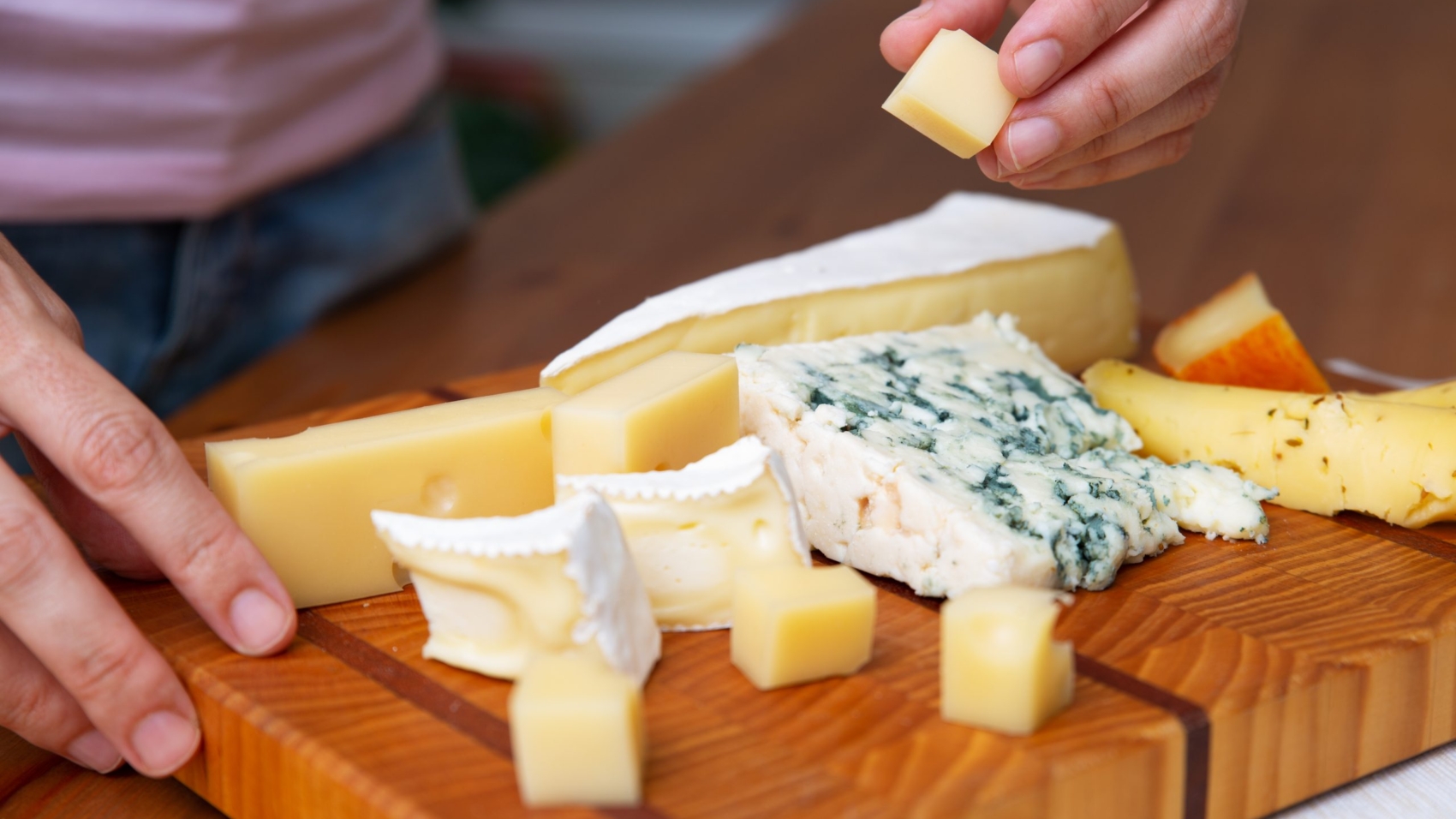
Are you trying to blast belly fat? Clearly, your diet is crucial. If you like cheese, you are in luck. According to Tara Collingwood, MS, RDN, CSSD, LD/N, ACSM-CPT, a Board Certified Sports Dietitian and co-author of the Flat Belly Cookbook for Dummies, cheese can be incorporated into your weight loss diet. “No single food causes belly fat loss. However, higher-protein cheeses that are easy to portion can support fullness and muscle maintenance, both of which are important for overall fat loss,” she says. Here are the 7 best cheeses you can eat while losing belly fat.

Cottage Cheese

Cottage cheese is one of the highest-protein cheeses, which helps support muscle growth and keep you full. “Maintaining muscle is important for metabolism, especially when you’re trying to lose abdominal fat. Low-fat or full-fat can work depending on portions and preferences,” she says.

The 6-Minute Morning Routine That Flattens Belly Overhang Better Than Ab Workouts After 50

Greek-Style Feta

Greek-style feta is also a good choice. “Feta has a strong flavor, so a little goes a long way,” Collingwood says. “That makes it easier to control portions while still adding satisfaction to meals. Great crumbled over salads or roasted vegetables.”

Part-Skim Mozzarella

“Mozzarella is relatively low in calories and provides protein and calcium, nutrients that support body composition when included in a balanced diet. String cheese portions make this especially easy to manage,” she says.

Parmesan

Parmesan is another cheese you can eat while losing weight. “Hard cheeses like Parmesan are flavorful and protein-dense, meaning you can use small amounts and still feel satisfied. A tablespoon or two adds big flavor without many calories,” Collingwood says.6254a4d1642c605c54bf1cab17d50f1e

Swiss Cheese

Swiss cheese is a solid option. “Swiss cheese offers protein with less sodium than many other cheeses, which can be helpful for people watching their bloating or water retention. Pairs well with whole-grain bread or fruit,” says Collingwood.

Ricotta (Part-Skim)

Collingwood is a fan of ricotta, which “provides protein and calcium and works well in both sweet and savory dishes, making it easier to stick with a calorie-controlled plan,” she says. “Try it with berries or herbs and vegetables.”

Goat Cheese

Goat cheese is her last cheese recommendation for losing belly fat. “Goat cheese is rich and tangy, which helps with portion control, and some people find it easier to digest than cow’s milk cheeses. A little adds creaminess to salads and bowls,” Collingwood states.